Table Of Content
User experience designers create user interfaces that are easy to learn and navigate using this educational principle. In the same way, the body text of a web page is usually a color that contrasts with the background, making the text easy to read. Similarly, a great web page creates visual contrast with white space and carefully-planned color schemes.
Content Pit Review: Is it Possible to Find Fast, Inexpensive, and High Quality Content?
Serif, Sans-serif, script, monospaced, and display are the basic typescript classifications. Using different font groups can create contrast for the text we want to be signified. When you first look at a graphic design piece whether it is a picture or a poster, you will notice contrast.
Best, High-Converting Landing Page Designs in 2022
Repetition is the intentional use of recurring elements throughout your design to create consistency, unity, and a sense of cohesiveness. It helps users build familiarity with your design and reinforces your brand identity. Repetition can be applied to various design elements, including colors, fonts, shapes, and patterns. To achieve a more satisfying user experience, you should apply the CRAP design principles, which focus on contrast, repetition, alignment, and proximity.
Applying CRAP in UX Design
Domain-Driven Design: Everything You Believe Is Wrong! - Visual Studio Magazine
Domain-Driven Design: Everything You Believe Is Wrong!.
Posted: Wed, 15 Jul 2015 07:00:00 GMT [source]
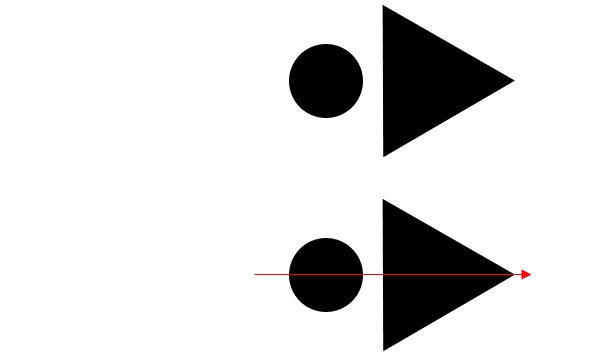
In terms of elements, you can align them based on their edges or their centers. However, texts can be aligned to left, right, or center, or can simply be justified. This Instructable will demonstrate the CRAP design principles and teach you how to use them. Design principles are used to make your designs pop out and guide the audiences eye where you want it to go. The principles include contrast, balance, pattern, variety, and unity.
Negative space is a big component in web and graphic design, creating a feeling of minimalism and simplicity. The four basic principles of design include simplicity, clarity, consistency, and accessibility. The R stands for “reduce,” while the P stands for “prioritize.” These two words are used to describe how to create a better design. Reducing clutter and prioritizing what matters most are key concepts when designing a new website. That way, you’ll only have to go through the design process the first time.
Narrow columns and long words can pose readability issues when justification is used. It is the concept that advocates organizing information to create order. Contrast in shape can be as basic as adding round corners to your quadrilateral elements, or as extreme as using circular elements together with square ones.
Contents
When you align the text to the left and neatly organize all the sections to be in line with each other, our brains have less work to do. Your dedicated VWO representative, will be in touch shortly to set up a time for this demo. We will come prepared with a demo environment for this specific website. While both the cards above contain the same information, the way it’s presented is different.

Also, our brains have a much easier time, allowing us not to waste additional energy on that unnecessary task. It, in turn, creates a feeling of more comfortable experience scanning and reading this website. Repeating specific elements in a design helps give your website a unified look and feel. For example, if you use the same font for all your headings, all your designs will feel connected, and users will start associating that font with your brand. For example, if you want to highlight a call-to-action button, you would use a color that contrasts sharply with the background color of your website. By using contrast, you can direct your users’ eyes to the most important elements on your page by creating emphasis and helping them understand your content better.
It gives a sense of clarity to the size of Big Ben in the distance to the market stalls that are closer. Proportion refers to the relative size and scale of elements in the design. It's essential for making things look three-dimensional and also adds direction and hierarchy. It uses direction to differentiate the characters from the ones that stand out. Pattern also helps differentiate things, and color and contrast make things stand out and blend in.
With proximity, instead of putting the most important thing at the top, the most important thing will be the biggest thing. Proportion adds order and perspective, creating a relationship between elements. This picture cleverly uses negative space to outline the person's body.
When users find a website visually appealing, they are more likely to stay longer and explore its content. Proximity is the principle of placing related elements close to each other to indicate their connection. Grouping related elements together enhances user comprehension and helps them navigate your website with ease.
These principles are essential in creating visually appealing and intuitive designs that engage users. Contrast is one of the fundamental design principles used to distinguish between sections or elements of your asset. Nobody likes to navigate around a website with an entirely white background. Break those elements up a bit by adding complimentary background colors to the sections around it. Another way of adding contrast is to use large or bold text, also known as “headers.” Contrast can be overlooked or over applied easily.
Different sections have the same ribbon graphics to contain their headings. Contrast is all about making sure that different elements on your page stand out from one another. Use contrast to create visual interest and highlight important information. According to statistics, 88% of people who shop online say they would not return to a website if they had a bad user experience. Furthermore, only 55% of companies test UX for business purposes. And in vain, because UX can not only increase traffic to your website but also your monthly income.



No comments:
Post a Comment